Anvora
 Anvora are a birdlike people with an inclination for the arts and a culture that encourages peace and kindness above all else. They are one of the six Rendi races and believed to have been created by the sister Du Doria from small berries and feel a kinship with all other Rendi races, treating any from the Rendi as one of their own.
A nomadic culture, most anvora spend their time travelling the lands, only settling down temporarily to grow supplies or foster community when needed. Because of their nomadic tendencies and kind nature, anvora have become known as the “tourist” race, and many inns look forward to hosting these generous, well-tipping guests.
Physical Traits
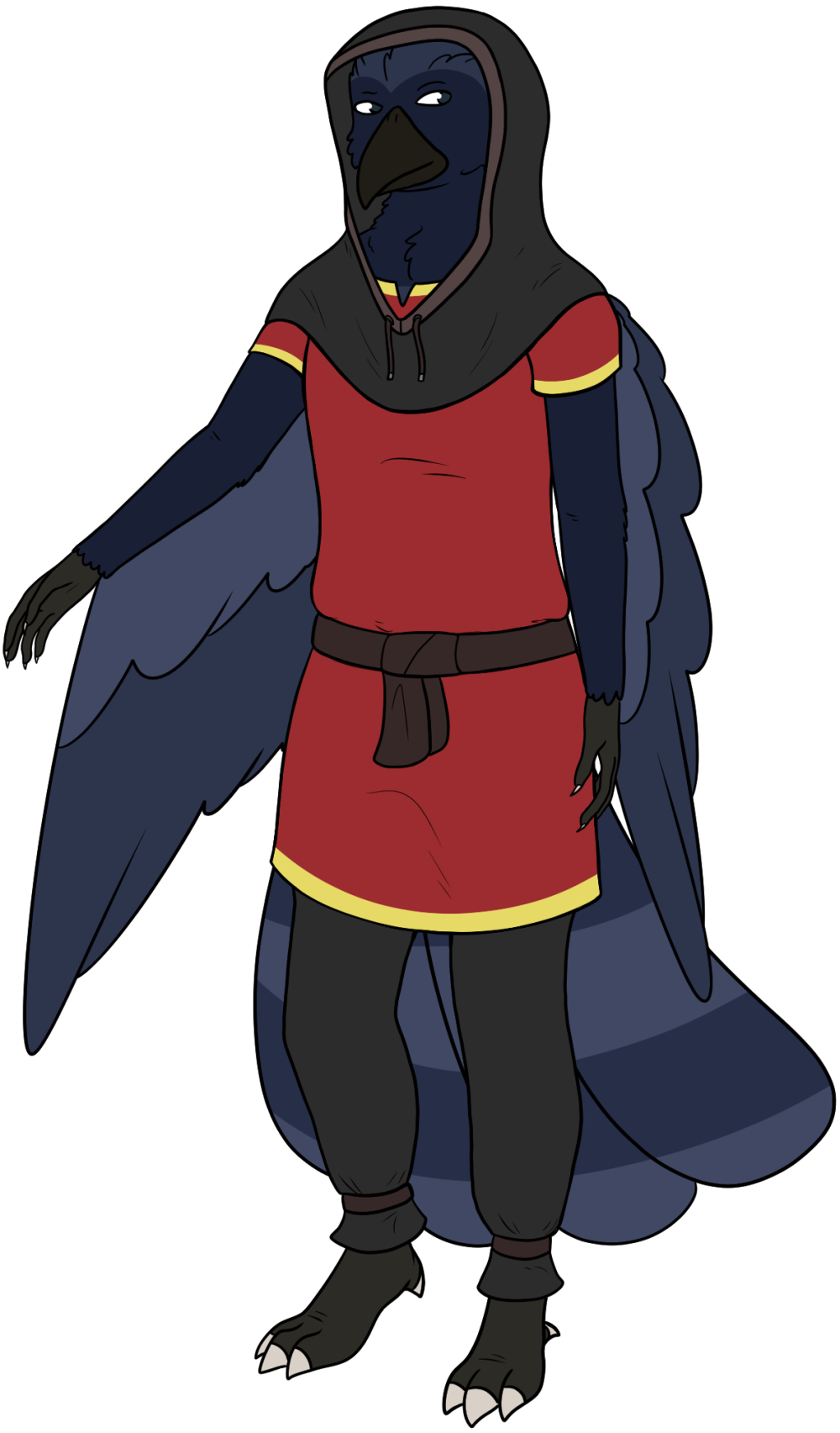 Av. Height (Male): 4’2”
Av. Height (Female): 4’5”
The anvora are a flat-footed birdlike people with beaks, feathery crests, and long tails. Naturally petite, they are on-average the shortest Rendi race, and the second-shortest bipedal Sentients, with only the foxen people being on-average shorter. However, despite being the second-shortest bipedal Sentient, they are still a few inches longer than the average maren when laying side-by-side.
An anvora’s entire body, excluding their hands and feet, are covered in soft feathers of varying lengths. They have a manes atop their head which resemble hair and can be loosely styled to preference via either trimming, plucking, or tying back the feathers of different lengths. The natural lengths of these manes varies between anvora, though those with longer manes may cut them shorter and those with shorter manes may add extensions.
Their tails are long and thick, used for flight, and their flight feathers sprout from their arms, running from their wrists to the backs of their shoulders and combining their wings with their arms.
Unlike most of the other colourful Rendi races, anvora have very limited feather pigmentation, with the most extreme colour variations being a signal of the sexes. Anvora men tend to be very rich, dark colours, with their feathers being limited to near-black cool hues of blues, purples, and greens. Meanwhile anvora women are more likely to be warmer shades of brown, cream, or off-whites. It is not uncommon for anvora to have patterns in their feathers, though these patterns will usually be simple with very few colour variations.
As small children an anvora’s beak is dark in colour and has a naturally a soft, rubbery texture to it. The majority of their beak will harden as they get older, except for the gape flange around the corners of their mouths where their upper and lower mandibles meet. The flange remaining soft into adulthood allows them to emote like other beakless Sentients.
Like most beaked animals, an anvora’s beak never stops growing and must be maintained as part of their daily grooming habits. Where one might brush their teeth to prevent rot, an anvora uses a gentle file to stop beak overgrowth. Because of this growth, some anvora attempt to style their beak growth into interesting shapes; this is not an easy thing to do or maintain, however, as a beak’s shape relies heavily on genetics and trying to force them to grow differently can cause lasting damage that will need to be corrected by a medical professional.
Sex and Gender
Anvora don’t have many naturally varying sex characteristics besides their feather colouration and their genitalia, which is internal for both males and females. Most other varying gender traits are non-biological forms of self-presentation and chosen by the individual, with things such as mane-styles and popular clothing items varying between the sexes; though what is considered masculine or feminine can vary on location and/or age.
The men have dark feather pigmentation, with hues so dark they often appear close to black, their feathers are usually cool colours such as blues, purples, and greens. This is a contrast to the women’s colouration; warm browns, creams, and whites.
The dramatic difference in feather colours between the sexes leads to some transgender individuals dyeing or bleaching their feathers to match their presentation more to their gender identity. Though the process is intensive, time consuming, and risks damaging their feathers, so it is not commonplace and most will seek other methods of euphoric gender presentation.
Because the genitalia of an anvora is completely internal and anvora are born without their adult colouration, it is impossible to determine the sex of a anvora infants without invasive inspection. The preference from most parents is to simply use gender neutral pronouns until their child loses their down (at around 2-4 eclipses of age) and sex can properly be determined without being invasive. The most commonly used childhood pronouns used by anvora are ih/eh/ehz.
The internal reproductive system of an anvora is one of the few things that differs between the sexes. From the outside, their genitals look very similar, though internally they are different. Both sexes have a cloaca-like slit for their genitals; though as it is separate from their digestive tract and anus it is not considered a true cloaca. Instead, they refer to their outer genitals as a “terclo.”
Within this terclo, male anvora have a short, thick penis that pokes out about two inches when it becomes becomes erect. It is rather rounded in shape and spongy to the touch. Because of the way the penis connects to the upper inside of the anvora’s anatomy, it is possible for male anvora to both penetrate and be penetrated while erect.
With the female terclo, there is no penis; though the clitoris is found on the upper inside of the anatomy in the same place the penis connects in a male. This means it is placed just right that, when having penatrive intercourse, it will be stimulated. However, it is difficult to stimulate without penetration and many sapphic anvora rely on toys to engage with each other.
Racial Variations
Gloamer
The gloamer anvora are named for their night-dwelling habits and unusual resemblance to barn owls. Like most anvora their sexual dimorphism is immediately visible in the colours of their feathers; with female gloamers having white and brown feathers like the barn owls they take after, and males having dark black-reddish feathers that closely resemble those of a melanistic owl.
They make their homes in the caves under the Rendi, travelling great distances without ever coming above ground. Because they spend so much time in the caves their eyes have developed for low light lifestyles and they prefer not to come outside when the sun is up. As their eyes are developed for low-light they are often large and wide. Those unfamiliar with the gloamer body language may be unsettled by their stares.
Their time in underground caves has also led to their wings shrinking significantly, and most gloamers are unable to fly.
Taenio
Taenio anvora are considered the most colourful of all anvora races, with patterns resembling those of a zebra finch. Their beaks and skin are a very striking orange colour, a contrast to the usually-dark features of other anvora.
They come from a very small cultural pocket in Corka’kor, a kogarg kingdom, with their origin point sitting on the border of the anvora kingdom Yea’na. Because of this it is strongly believed their bright colours come from kogarg ancestors.
This theory is heavily supported by taenio feathers containing the same protective oils that kogarg produce, and though they produce the oils at a much lower rate than kogarg they still have the benefits of a weak soulstone resistance that other anvora do not. They also have a strong natural affinity for magic, much like kogarg.
Norhin
The norhin anvora are a long-beaked race of anvora that resemble crows, ravens, and magpies; the men being solid black, and women being black with various white patterns in their feathers.
They were not a known race until 6,753 AE, when the entirety of the norhin people mass immigrated from the unexplored territories to the Rendi as refugees. This was a rather significant surprise for all of the allied races, and though the norhin spoke their own dialect and initially had trouble communicating with those in the explored territories, they were welcomed to the Rendi with open arms and soon found a home amongst the other anvora.
They are named after what is documented as their country of origin, Norhin, located far past the salaytah territory of Bia Boralis. The only Sentients that have ever been allowed to pass through Bia Boralis, they were granted passage by the native salaytahs when Norhin was invaded by an unknown race of Mystics referred to as the “ophids.”
Nomadic by nature, like all anvora, the norhin believed their ancestors to be wanderers who got lost due to bad weather and were unable to find their way home. Stories of the Rendi and their sister-races were passed down through the generations as tales of hope and purpose. They believed that upon their deaths the way home to Rendi would illuminate as a trail that their spirits would be able to follow home to their true place of belonging.
During their immigration through Bia Boralis they were lead by a girl only four eclipses old who, two days before the invasion, lost her vision almost completely with seemingly no cause. Upon losing her vision she spoke of seeing the spirits of the dead and the glowing trail they followed, though everything else besides the spirits and trail was shrouded in cloudy blackness. When invaded, the people turned to her in desperation; praying her strange new sight was a gift sent by the gods to save them. When they found their way to Rendi she was deemed a holy figure and eventually became the lead priestess of a church.
Common Disabilities and Health Issues
Hypocalcemia
As anvora grow, they have a change of developing hypocalcemia. This condition can usually be caught fairly early on in their development, due to their beak remaining a rubbery texture and not hardening at the correct age. When caught early the cause can usually be determined and treatment administered before more permanent damage is suffered.
Causes of hypocalcemia can range from kidney issues, vitamin deficiencies, celiac disease, or issues with their thyroids.
Because the causes of hypocalcemia can vary, the symptoms can also vary. However, some of the more common issues are joint pain, muscle spasms, seizures, neurological decline, dry skin and brittle claws, and numbness of fingers and toes.
Chronic Moult
Chronic moulting is a rather common issue amongst anvora, especially during their teenage years. Much like a race with bare skin may suffer from chronic acne, chronic moulting is generally indicative of a hormone, skin, or nutritional issue.
Generally, anvora are supposed to moult twice a year, with each moult lasting around 14 days. Chronic moulting varies in severity but can be diagnosed if moulting consistently lasts more than 20 days or the anvora moults more than 4 times a year. The most severe form of chronic moult is a condition called “sempiternal moult,” in which the anvora is in a constant moult state for more than 6 months.
Though the condition is, ultimately, considered harmless and often grown out of after finishing puberty, it can have a negative impact on the anvora’s mental state due to the affect it has on their physical appearance. It often gives the appearance that one has not maintained a proper grooming routine, even when they have, and often leads to them being perceived or treated as if they were dirty or unclean.
Grume Feathers
Grume feathers are a developmental issue amongst some anvora, where the blood inside of their pin feathers clots and the blood supply doesn’t recede properly. This can cause issues with feather growth, moulting, and bleeding, and is often described as a very painful condition.
Rather than the blood supply remaining at the base of the feathers, as is common with growth, the entire shaft of the feather fills with blood that clots and, when the fresh blood supply is cut off from the feather, the clots can become a health risk due to the blood expiring and beginning to rot. Bacteria festers inside the feather shaft and causes severe infections that require medical treatment.
The exact cause of grume feathers is currently unknown, though there is believed to be a genetic component as certain families are more inclined to get them than others.
Relationships and Life Stages
Soulmates and Marriage
Anvora are a mostly-monogamous people, with some rare exceptions. They believe in soulmates and that two people are destined by a higher power in the universe to find each other and become connected on a deeper level than possible with anyone else.
They believe partnerships to be a sacred bond of unconditional love and deep comfort; that a soulmate feels like somebody you have known forever, even if you have only met a few days ago.
A soulmate can come from anywhere, and oftentimes anvora will meet other travelling parties outside of their own and instantly feel a connection with someone. When this happens and they believe they have found their soulmates, they will get engaged and one of the anvora will leave their family to join the other’s own for a full year, before both groups meet back again the same location the engagement was announced.
Once engaged anvora will travel for one full year together. This is a symbolic test of their connections; if they can spend a year together with no diverging path despite the changing seasons and travelling conditions, then their souls were destined to be together.
Their marriage ceremony is also symbolic of their soul’s connection. After the year of travelling both families will meet up again and, if the engagement is to go through, they will build a small settlement in which they will spend 1-6 months together planning the wedding. During this time, the engaged partners will create two separate in-flight dances that they teach to their own families. A lot of care goes into this dance as it is considered the most important component of the wedding; more so than any food, decorations, or location.
Once both parties have completed their dances, the wedding will commence. Both families take to the sky and perform the dance for each other, with the engaged party dancing together between the two sides. Though the families will perform the entire dance the way they have practised, the couple must adapt their dance as they perform to suit each other and avoid collision or hampering each other’s expression. This is representative of the compromise and growth that comes with being soulmates; you must accommodate your partner, and they must accommodate you in return.
By the end of the dance the couple should be in sync with one another; if they are not, it is considered a bad sign and the wedding often is annulled and the pair part ways.
Life Stages
 It is very, very rare for an anvora to be born out of wedlock. Because their culture puts a lot of emphasis on soulmates, it is not common for an anvora couple to have sex before marriage, meaning the chances of children being born to an unmarried anvora is almost completely unheard of. It is so rare it isn’t even shamed, and is simply met with confusion.
Generally, anvora will start having children 1-4 years after they are married, with the same 1-4 years between each child so they can dedicate appropriate time to each one’s infancy. Some anvora start trying for children later if they are in hardship, though it is not common for partnered anvora to avoid having children altogether.
They lay an egg that is roughly the size of their fist, and must keep this egg safe and incubated for 7 months. This is usually achieved with a specialised carrier that straps the egg to their breast and uses their body heat to keep it warm. Incubation duty is shared equally between both parents, with other members of their family often providing support or breaks as the raising of children in anvora culture is considered the responsibility of the entire community.
During the later stages of development many anvora parents describe the feeling of their babies moving inside the egg and compare it to how non-Rendi races may feel a baby kick inside the womb. The first time a baby is felt moving inside their egg, the parents celebrate by collecting the seeds or a trimming of a plant near where they are currently travelling and planting it in a pot. They will keep this plant with them and care for it. Once their child hatches, they will transfer the plant from pot to ground to grow where their child was born.
The day an anvora is ready to hatch, small “peeping” sounds will be heard from within the shell. This peeping is referred to as the anvora’s “soul sound” and is believed to represent their most pure innocence. Considered an extremely significant part of their being, their soul sound is used as a part of their name.
All anvora are born small, fragile, and featherless. A newborn anvora (most commonly referred to as a “hatchling”) is light enough to be carried in one hand (though doing so is frowned upon) and is completely reliant on their parents for care. They cannot regulate their temperatures and so remain strapped to their parents’ chest as they were in their egg. All they are able to do for the first two months of life is cry and eat, as they cannot even lift their own heads. Their beaks are soft upon hatching, and have a small colourful strip along the flange that fades away with age.
As hatchlings are born featherless, it is impossible to determine their biological sex impossible without an invasive procedure that most parents don’t want to subject their infants to. Instead, young anvora use a gender-neutral set of “infant” pronouns, ih/eh/ehz, which they grow out of as they get older.
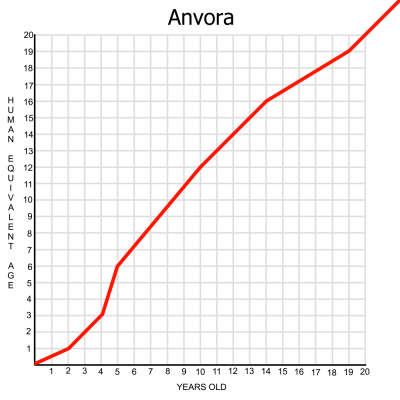
At the two month mark of their birth they begin to grow spiky grey down. This is when anvora will stop using the term hatchling for their children and begin using the term “nestling” instead. They will not outgrow this down or the title nestling for several years. Nestlinghood is when anvora develop a significant amount; with the speed of their development varying greatly between individuals but averaging out with measurable numbers.
On average it takes nearly a year and a half, roughly 14-15 months, for an anvora to start crawling, though some start as early as 9 months and some as late as 18. This is also around the same time their beaks begin to harden and they begin learning to speak. They still heavily rely on their parents for body temperature regulation, and still spend most of their time attached to their parents with only 10-20 minutes at a time to roam and play on the ground.
Between 18-24 months, roughly 2 years, anvora begin to regulate their own body temperatures and should start learning to walk. This is when their development begins to pick up in speed. Within the next 2 years after learning to walk, generally before the age of 4, an anvora will begin to shed their down and their flange colour begins to fade as they develop their true colouration and patterns; this is when they stop being nestlings, and become “fledgling” children.
When the first adult feathers start to show on a young anvora, they have a a coming of age ceremony known in International as a Fledging, and in the anvora’s native tongue as a Totati. A Fledging is a very exciting time for a young anvora. Their family takes pause from their travels for several days to prepare a feast and celebrate the young anvora’s transition into personal independence. Warm clothes will be made, as the young fledgling will finally be allowed to live off their parents’ chests, and they will receive the first set of their own bedding (though, many anvora still spend colder nights beside their parents for several years to come). They will begin flight lessons, starting with flight safety and eventually leading up to practical lessons.
Most importantly to a young anvora is, during their Fledging, they will shed their infant pronouns and receive their adult pronouns. Culturally, this marks the recognition of the anvora as a true individual and sets them apart from their younger peers. With these pronouns they also receive their first responsibilities and chores within their community; making them feel much more mature. What these chores are is determined by the exact age a child becomes a fledgling, though they are usually very simple things that are easy to handle, such as folding laundry or washing dishes.
By 5 eclipses, all anvora should have finished their Fledging and have their fully developed feathers. They are old enough to spend several hours a day without supervision (usually spent exploring with their friends). Their development begins to slow to a steady pace, and between the ages of 8-12 they will start puberty.
Once every 6 months after hitting puberty, female anvora will go into cycle and lay an egg, regardless of if they have had any form of sexual contact or if the egg has been fertilised. The first few eggs of an anvora are usually pint-sized “fairy” eggs, as their body adjusts to the new biological function. It is traditional for these undersized eggs to be preserved and kept by their parents similar to how some toothed races keep baby teeth. Once a girl starts laying full-sized eggs a celebration is held for them and they are taken aside by the older women of their families and taught traditional methods for passing eggs painlessly and the burial ceremonies to dispose of the eggs.
It is important to note that, in anvora culture, egg-laying is not considered indicative of adulthood. Though girls of egg-laying age are welcomed to share space with the older women of their families, they are not considered adults until their early 20’s and their teen years are a transitional period where they are still encouraged to enjoy their childhood.
Male anvora puberty is indicated by the development of their syrinx organ. This organ allows them to perform specialised vocalisations that female anvora cannot, such as cawing, crowing, and honking noises. Upon development of this organ boys are taken out and trained in how to scout, track, and make long-distance vocalisations. Like the girls, boys are not considered adults until their 20’s, and in their teenage years are still expected to act like children.
Most of their physical development is over by the time they are 18 eclipses, though they have a social grace period for their mental development to catch up. By 20 they are expected to behave as adults, and this is usually when they will start to seek out partners and look to have their own children.
Lifespan Facts
• The average lifespan of an anvora is 105 eclipses, and they are usually fairly fit both physically and mentally up until their 100’s.
• The oldest known anvora was at least 150 eclipses old. He was a gloamer with chronic moult, who wandered into the wilderness to live alone at around 80 eclipses. Somehow, he found himself in the swamps of the Foxen Empire and became a much-feared cryptid until someone actually decided to approach him and discovered his identity. They shared a meal and then went their separate ways, and nobody is sure how long he actually lived for.
• Anvora eggs have a variety of colours and patterns, and though generally an individual woman will lay eggs that are consistent in appearance, eggs can look vastly different even within the same biological families and no anvora knows what her eggs will look like until she starts laying.
• Anvora have a complicated relationship with abortion, due to their consistent egg-laying natures. Though it is socially acceptable to dispose of an egg within two week after it has been laid, generally by burial, it is considered morally dubious to give up on an egg after a month of incubation, and indefensible to dispose of an egg between 5-8 months.
• It is very rare for a fertilised egg that has been properly cared for to not hatch, though exact numbers aren’t well known due to the nomadic nature of their culture.
Culture
Nomads by Nature
Anvora are almost completely nomadic, living in caravans and rarely settling in once place for more than a few months at a time. Those that do settle down generally do so out of necessity, such as due to disability or age, and will form small communities on well-travelled roads that act as spots of respite for those who pass through. They believe they inherited this trait from their ancestor goddess, Du Doria.
Despite having personal property, there is no concept of land ownership in anvora culture. As they are constantly on the move, land is seen as a public resource that needs to be available for everyone to travel on, and the idea someone would have the right to prevent others from crossing or foraging within a territory is inconceivable to an anvora. Even those who settle down (permanently or temporarily) welcome those who come across them to use the land as-needed; openly sharing their campgrounds and any crops they may be growing while stationary.
Because they are near-constantly on the move resources can be difficult to come across. Most of an anvora’s food is foraged, hunted, or traded for, with some things such as wheat being grown in potted gardens within their caravan homes. Bad weather or the loss of a caravan is one of the greatest risks an anvora can face due to the strain on their food stocks. Because of this, they put a great importance on helping those in need and believe that providing aid for those seeking it will assure them charity in their own future, should their need for it ever arise.
As they are encouraged to be selfless and giving there is very little in the way of theft in anvora culture and the concept of highwaymen or bandits is practically unheard of in their lands. Most travellers one will come across in anvora lands will be respectful, helpful people willing to talk or share meals. This does, however, lead to issues when anvora travel outside of the Rendi, as they are generally not expecting to be robbed or scammed by the people they meet in their travels and the first time they are wronged can be a shock.
It is common, when two anvora caravans meet, for the groups to band together temporarily for several weeks as they travel the same paths. When they eventually split, any anvora who have developed romantic bonds during their times together will announce their engagements and the groups will make plans to meet again in a year for the marriage.
Art and Expression
Anvora have a strong connection to the arts, believing their ancestor-goddess Du Doria to be one of the first artists of the world. It is said that Du Doria was the first within the Rendi to discover how to turn nature into pigments, and pigments into medium.
Anvora create artwork as they travel, using the natural world around them as their canvas. Though no anvora expects their art to last more than a season, is not uncommon when travelling well-known roads to find markers made from elaborately painted rocks, tree branches weaved together to grow in patterns, or flowers planted to create living murals that can only be seen from above.
They also have a strong pull towards textile work, and their caravan covers are usually made from beautiful, complicated weaves of fabric that are customised to match the lovingly-painted wood. Their moving homes are made into art pieces, and are very colourful and homely.
Language
Anvora voices tend to be low pitch and quiet, and are often monotonous. They will usually say how they are feeling to non-anvora aloud, in order to avoid misunderstandings with their tones and body language.
A large part of anvora communication is done with body language; emotion is expressed almost exclusively through body language and facial expression with no feeling being shown in their voices.
The written anvora language reads like an essay; they are very to the point and don’t often use emotion in their writing. If they do want to express emotion in their writing, they will add a tone indicator specifically stating to read the paragraph in a certain tone. This often looks like “TONE: HAPPY” before the written text intended to be read in said tone.
Anvora do not laugh, but instead simply state that they are enjoying themselves. When trying to communicate with other species, they will often say “ha ha ha” or “I am laughing” out loud instead of imitating actual laughter.
Naming Conventions
Anvora names are made up of two parts. They have no family name, simply a name chosen by their parents, their given name, and a name that is believed to represent their inner child, called their soul sound. An anvora’s soul sound is, generally though not always, shorter than their given name.
Their given name is generally no shorter than two syllables, and can be as long as four. Though most anvora prefer to go by their full names, if a shortened name is to be given it is considered polite to use their given name without their soul sound, instead of their soul sound without their given name.
When an anvora begins to hatch from their egg they will make a small sound, referred to as their soul sound. This considered an extremely important part of their being, and so the closest spoken phonic that resembles the sound is used as a part of their name. Usually this is only a single syllable, though if a soul sound is longer they rarely may use two syllables.
Whether an anvora’s soul sound is the first or second part of their name is determined by which parent was caring for their egg when they first began making the noise. If their father was caring for them, their soul sound will be at the front of their name. If their mother was caring for them, their soul sound will be after their given name.
Common Religions
Aurn
Okara
Starku
Clothing
Because of anvora’s artistic love of textiles, they are usually very creative with their clothing and can be found wearing a large variety of clothing. Most anvora have clothes that are hand-made by members of their own families, and so fashions tend to be unique to each travelling group; though inspiration is often taken by those they meet in their journeys.
They are considered one of the most fashionable races on Demrefor. Their travels providing them with inspiration, those that choose to go to different countries will often learn about and adapt their work to the common fashions of the times, combining them with others they have come across and improving on designs. Most fashion trends that appear in other cultures can be linked back to an anvora source.
Other
Misc
Anvora, like most of the Rendi races, have hollow bones and are buoyant. However, they are the lightest of all the hollow-boned races and are so weightless in water that they are unable to dive,
When they don’t have eggs strapped to their chests, many anvora will use their egg-straps to hold heat packs against their bodies and keep themselves warm. This is common even in hotter climates, and in colder climates anvora are thought to purchase more warmrock than any other race per person.